
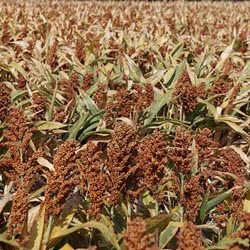
Sub Saharan Africa (SSA) is the largest sorghum producing region in the world, growing nearly 44 percent of global output. Yet it exports and imports only a small fraction of globally traded milo. Production in the region has been relatively stable. By contrast, world trade in sorghum has been volatile, peaking in 2014/15 at 12.1 MMT, slumping in 2018/19 to just 3.4 MMT, and now rising back up to 11.4 MMT. China is responsible for nearly 90 percent of the increase in global sorghum imports. While North American production of sorghum is second only to SSA, the standard deviation for annual output is the highest among major producing regions. Either North America or SSA could gear up to dominate the supply of sorghum for China except t...


 Markets will have plenty to digest over Thanksgiving. The administration proposed new tariffs on 14 trading partners, core inflation came in slightly above expectations, and USDA reported a fresh sale of U.S. soybeans to China. With grain and livestock markets closed Thursday and trading in a s...
 In observance of the U.S. Thanksgiving holiday, financial markets will be closed Thursday, 26 November. WPI’s offices will also be closed, and no issue of Ag Perspectives will be published that day. Ag Perspectives will resume Friday, 27 November. From all of us at WPI, we wish you and yo...

 Key Takeaways: Farm costs have outpaced selling prices. From 1975 to 2025, the broad index of prices farmers paid rose about 549 percent, compared with 225 percent for prices received and 498 percent for consumer prices. Productivity has cushioned the squeeze. By 2023, U.S. farms produce...


 Key Takeaways: Renewed strength in soymeal and sustained weakness in soyoil have challenged the “crush for oil” narrative that has largely driven the expansion of U.S. soybean processing capacity in recent years. Record October soybean crush volumes, historically low soymeal yields...

From WPI Consulting
Accountability and a comprehensive approach to export programming

WPI’s team helped construct a strategic approach to develop, implement, and track promotional activities in 8 key regions across the globe for an agricultural export association. With continued progress measurement and strategic advisory services from WPI, the association has seen its ROI from investments in promotional programming increase by 44 percent over the past 5 years. Not only does this type of holistic approach to organizational strategy provide measurable results to track and analyze, it fosters top-down and bottom-up organizational accountability.