


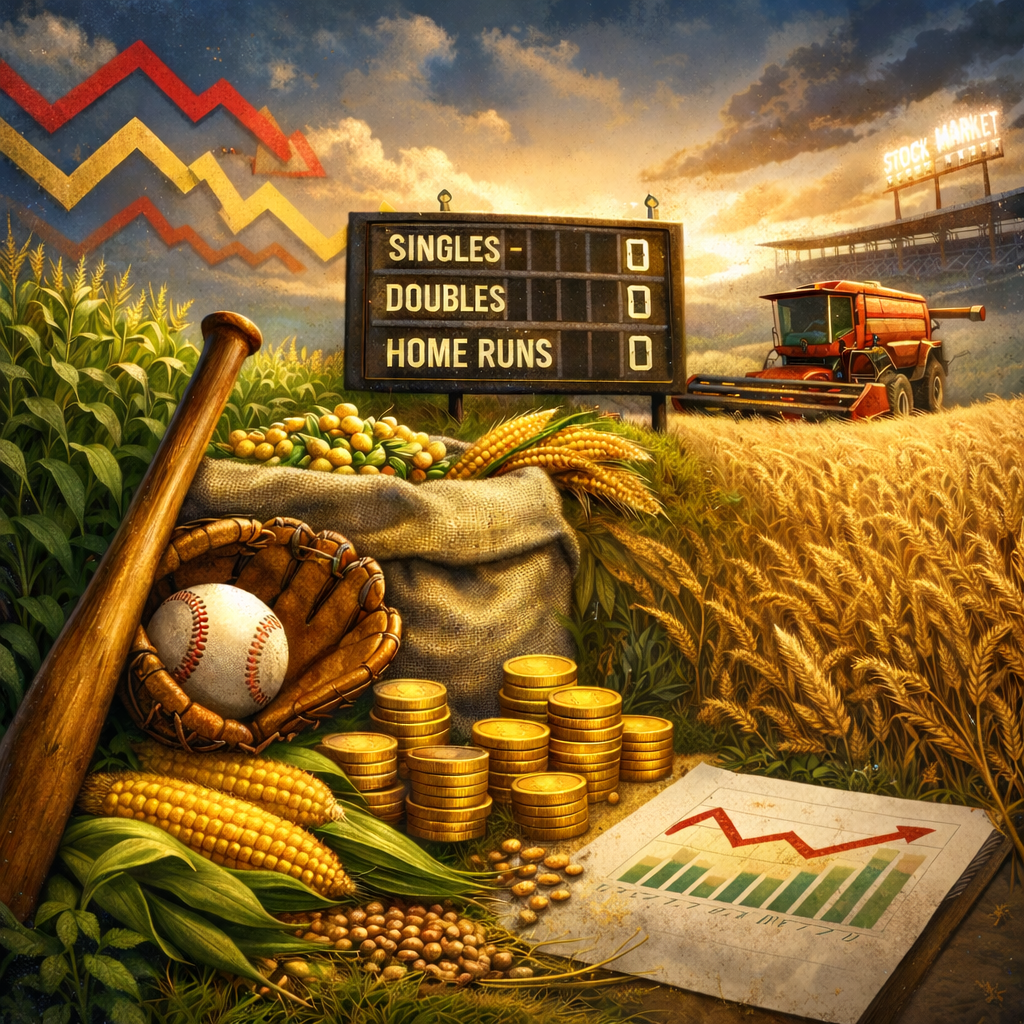
With the spring planting effort just around the corner, producers and traders are starting to get a handle on the outlook for the coming marketing year. That outlook suffered a bit of a shock following the January WASDE report, as USDA reiterated the large-supply narrative for U.S. and world grain markets. Now, with the WASDE behind us, the South American crops being harvested, and long-lead models giving more clarity on global weather patterns, WPI offers our thoughts on the likely trends that U.S. and global crop production and stocks are likely to see in 2026. Briefly, WPI’s research and models point to the end of 2025/26 and the first half of 2026/27 seeing large commodity stocks that will outpace relatively strong demand. E...


 What You Need to Know Today: The U.S. dollar continued to strengthen Thursday as persistent inflation reinforced expectations for additional Federal Reserve interest rate hikes. Higher Treasury yields have helped support the dollar, potentially reducing the competitiveness of U.S. agricultural...

 In yesterday’s WASDE, USDA reduced its overall red meat and poultry production forecast for 2026 as declines in beef and broiler output more than offset increases in pork and turkey production. Fourth-quarter beef production was revised downward because of slower fed cattle marketings and...
 Key Takeaways: Dry bulk freight markets were stronger this week, but the rally was uneven and due to divergent dynamics across basins and vessel classes. Panamax markets were broadly higher, but Atlantic grain demand was primarily responsible while Asian activity was subdued. That trend...

From WPI Consulting
Infrastructure investment due diligence

On behalf of a Canadian oilseed processer WPI's team provided market analysis, econometric modeling and financial due diligence in support of a $24 million-dollar investment in a Ukrainian crush plant. Consistent with WPI's findings, local production to supply the plant and the facility's output have expanded exponentially since the investment. WPI has conducted parallel work on behalf of U.S., South American and European clients, both private and public, in the agri-food space.