
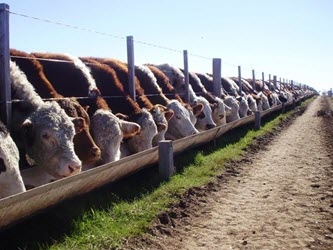
Cattle on Feed Industry pre-report estimates for tomorrow’s Cattle on Feed report from USDA peg the total number of cattle on feed as of 1 June at 103.4 percent of last year. If realized, it would be the 17th consecutive month that the inventory was larger than the year prior. May placements and marketings are expected to be 95.6 percent and 105.1 percent, respectively, of May 2017 totals. Those marketings supported May beef production at 2.31 billion pounds or 107 percent of May 2017. Cattle slaughter totaled 2.91 million head, 106 percent of a year ago and the largest volume since 2011. The average live weight at 1,315 pounds was up 8 pounds from last year. Aggressive marketings and strong demand helped buoy packer margins...


 What You Need to Know Today: Brazilian President Luiz Inácio Lula da Silva secured reelection on Sunday, defeating right-wing Senator Flávio Bolsonaro despite trailing in the first round of voting. The surprise victory triggered a sharp selloff in Brazilian financial market...

 The 2026 midterm elections are a week from tomorrow, but early voting has been taking place for weeks. At stake is control of Congress, including the House of Representatives, where all 435 seats are contested, and the Senate, where approximately one-third of the seats are up for election. Farm...
 Key Takeaways: Total U.S. crop acres (excluding hay) are forecast to expand fractionally this year due to greater oilseed crop and winter wheat plantings. One of the key drivers of this year’s crop outlook is input costs, and crops with a lower cost profile have an advantage in producers...

From WPI Consulting
Communicating importance of value-added products

Facing increasing pressure to quantify the value of export promotion efforts to investors, a U.S. industry organization retained WPI to develop a quantitative model that better communicated the importance of exports. The resulting model concluded that value-added meat exports contributed $0.45 cents per bushel to the price of corn, increasing support for that sector’s financial support of WPI’s client. In addition to serving the red meat industry with this type of analysis, WPI has generated similar deliverables for the U.S. soybean and poultry/egg industries.