
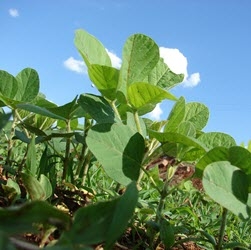
Plentiful Soybean Supplies USDA yesterday confirmed the U.S. will harvest a record soybean crop once again in 2018, forecasting the average national yield at 52.8 bushels/acre (3.55 MT/hectare) and a record production of 4.693 billion bushels (127.74 MMT). Even though it raised the estimate for 2017/18 U.S. soybean usage by 35 million bushels to 4.321 billion bushels (117.6 MMT), the 2018 crop size caused USDA to increase the 2018/19 ending stocks forecast by 60 million bushels to a record 845 million bushels (23 MMT). That huge volume of soybeans is unlikely to get much smaller anytime soon short of a substantial weather problem in South America or the U.S. in 2019. Among the significant changes in USDA’s U.S. and global supp...


 What You Need to Know Today: A third U.S. border crossing (Columbus, New Mexico) has reopened to Mexican cattle imports following nearly two years of restrictions related to New World screwworm. The reopening could gradually improve feeder cattle availability, although more than 60 confi...

 Yesterday, the USDA’s Agricultural Marketing Service (AMS) released a new report of negotiated cash purchases of cattle under the mandatory price report. The report included Colorado, New Mexico, Oklahoma, Texas, and Kansas. The goal of the report was to solve the confidentiality issues e...

 Key Takeaways: U.S. soybean crushing began in 1911 and saw its most rapid expansion during the 1930s amid the broader agricultural and technology revolutions of the time. After peaking in the early 2000s, the soybean crushing industry went through a downturn as poor crush margins forced...

From WPI Consulting
Forecasting developments in production agriculture

On behalf of a private U.S. agricultural technology provider, WPI’s team generated an econometric model to forecast the movement of concentrated corn production north and west from the traditional U.S. Corn Belt. WPI’s model has subsequently provided quantitative support to a multi-million-dollar investment into short-season corn variety development. WPI’s methodology included a series of interviews with regional grain elevators and seed consultants. Emphasizing outreach and communication with stakeholders who possess intimate sectoral knowledge – on-the-ground insights – is a regular component of WPI’s methodologies, made possible by WPI’s ever-growing network of industry contacts.