
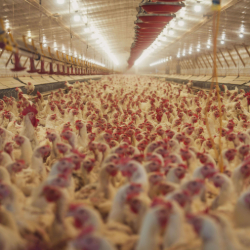
Brazil’s broiler exports are up 29.9 percent by volume in July and up 43.3 percent in value, and for the January through July period, exports rose 15.2 percent by volume and 19.3 percent in value. China was the top customer in July with 75,000 MT after being closed in July 2025 due to HPAI. Brazil’s production is expected to be 15.86 million MT in 2026, up 2.9 percent from the 15.4 million MT in 2025. U.S. production is forecast to increase 2 percent this summer and is also projected to be up 2.9 percent for the year. In a bipartisan letter sent on 28 August to U.S. Trade Representative Jamieson Greer, members of Congress urged continued pressure on China to fully comply with the U.S.-China HPAI Regionalization Agreement, which...


 What You Need to Know Today: The U.S. dollar continued to strengthen Thursday as persistent inflation reinforced expectations for additional Federal Reserve interest rate hikes. Higher Treasury yields have helped support the dollar, potentially reducing the competitiveness of U.S. agricultural...
 In yesterday’s WASDE, USDA reduced its overall red meat and poultry production forecast for 2026 as declines in beef and broiler output more than offset increases in pork and turkey production. Fourth-quarter beef production was revised downward because of slower fed cattle marketings and...
 Key Takeaways: Dry bulk freight markets were stronger this week, but the rally was uneven and due to divergent dynamics across basins and vessel classes. Panamax markets were broadly higher, but Atlantic grain demand was primarily responsible while Asian activity was subdued. That trend...

From WPI Consulting
Communicating importance of value-added products

Facing increasing pressure to quantify the value of export promotion efforts to investors, a U.S. industry organization retained WPI to develop a quantitative model that better communicated the importance of exports. The resulting model concluded that value-added meat exports contributed $0.45 cents per bushel to the price of corn, increasing support for that sector’s financial support of WPI’s client. In addition to serving the red meat industry with this type of analysis, WPI has generated similar deliverables for the U.S. soybean and poultry/egg industries.