
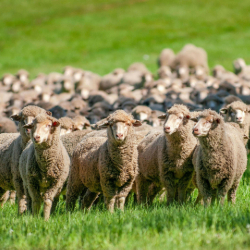
A Small Industry Tied to a Global Benchmark The U.S. wool industry is small by global standards but heavily export-dependent, with roughly 60 percent of U.S. wool leaving the country each year. Australia, by contrast, dominates world wool trade. Because the U.S. lacks a deep domestic auction market, USDA and industry groups look to Australia's AWEX Eastern Market Indicator (EMI) as the benchmark for global wool prices. USDA reports make the link explicit. Australian wool is quoted in U.S. dollars per pound delivered to Charleston, South Carolina, freight included, and roughly 75–85 percent of that landed price is used to estimate clean values at the U.S. warehouse and grower level. American wool is effectively priced as a discount to...


 What You Need to Know Today: The U.S. dollar continued to strengthen Thursday as persistent inflation reinforced expectations for additional Federal Reserve interest rate hikes. Higher Treasury yields have helped support the dollar, potentially reducing the competitiveness of U.S. agricultural...
 In yesterday’s WASDE, USDA reduced its overall red meat and poultry production forecast for 2026 as declines in beef and broiler output more than offset increases in pork and turkey production. Fourth-quarter beef production was revised downward because of slower fed cattle marketings and...
 Key Takeaways: Dry bulk freight markets were stronger this week, but the rally was uneven and due to divergent dynamics across basins and vessel classes. Panamax markets were broadly higher, but Atlantic grain demand was primarily responsible while Asian activity was subdued. That trend...

From WPI Consulting
Accountability and a comprehensive approach to export programming

WPI’s team helped construct a strategic approach to develop, implement, and track promotional activities in 8 key regions across the globe for an agricultural export association. With continued progress measurement and strategic advisory services from WPI, the association has seen its ROI from investments in promotional programming increase by 44 percent over the past 5 years. Not only does this type of holistic approach to organizational strategy provide measurable results to track and analyze, it fosters top-down and bottom-up organizational accountability.